
You finish a chapter, look at the clock, and realize you cannot explain what you just read. Or you understand everything, but the reading takes so long that you never reach the rest of your work. Neither approach is especially useful when you have several classes competing for your attention.
Improving your reading comprehension speed means getting to a usable understanding with less wasted effort. It does not mean racing through every sentence. You need to recognize what matters, slow down when the material demands it, and check that you can explain the ideas without looking. Here is how to build that process into your study sessions.
Decide what you need from the reading
Before opening the chapter, name the task the reading needs to support. Are you preparing for a discussion, learning a process, finding evidence for an essay, or studying definitions for an exam? Your purpose determines what deserves close attention.
For a discussion, you might need the author's argument and a useful example. For a biology exam, you may need to explain a mechanism in sequence. For an essay, you need to understand the evidence well enough to judge whether it supports your claim. Those are different reading jobs.
Write a question in your notebook, such as, “How does this process work, and what changes its outcome?” Then preview the headings, introduction, conclusion, and any chapter questions. This preview is a map, not a substitute for reading. It helps you locate the parts that answer your question instead of treating every paragraph as equally important.
Match your pace to the passage
- Move steadily through familiar context. If a paragraph reviews something you can already explain, read for new details rather than stopping to record the whole explanation again.
- Slow down for definitions and relationships. Pay attention to conditions, exceptions, cause and effect, and differences between similar terms. Missing a word such as “unless” can change the meaning.
- Work through examples actively. In math or another problem-based subject, pause before the next step and predict what should happen. Following a solution is not the same as being able to produce it.
- Read evidence closely when you will use it. If you plan to cite a passage, examine its context and limitations. A quick scan can help you find evidence, but it cannot establish what that evidence actually supports.
Remove the habits that create extra reading
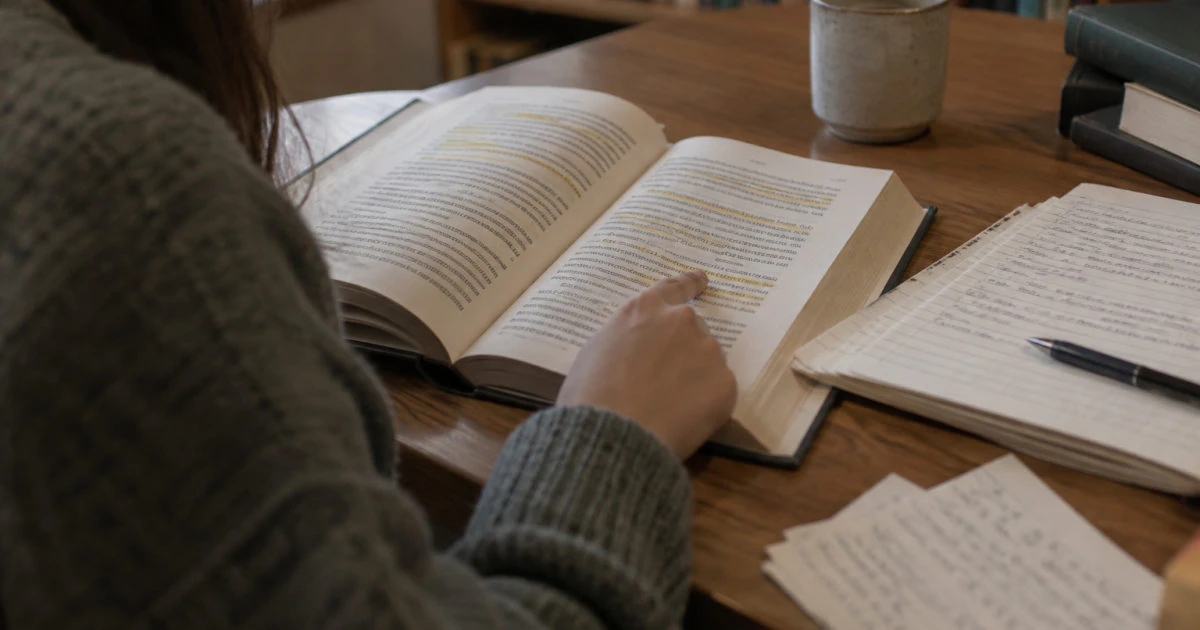
Some reading sessions feel slow because you keep interrupting them. You highlight a line, copy it into your notes, check a message, and then reread the paragraph to recover the thread. Start by putting your phone out of reach and reading a short, coherent section before taking notes.
At the end of that section, record the main idea in your own words. Add a detail only if it helps answer your reading question. Copying every sentence gives you another version of the textbook, not a clearer understanding.
When you catch yourself rereading, identify the problem. Did your attention drift? Is a term unfamiliar? Is the sentence referring to an earlier idea? Fix that specific gap. Look up the term or return to the relevant explanation rather than restarting the whole page.
You do not need to force yourself to stop hearing words internally or sweep your eyes across lines at an uncomfortable pace. Use a finger or a bookmark to keep your place if it helps, but let understanding determine your speed.
Check comprehension before moving on
After a meaningful chunk, close the book and answer your original question aloud or in your notebook. Explain the main claim, how it works, and one relevant example. If the passage makes an argument, identify the evidence and any important limitation.
A vague feeling of familiarity is not enough. “This was about memory” tells you little. “This section distinguishes recognizing an answer from retrieving it without a prompt” shows a more specific understanding.
If you cannot explain a key point, reopen the book and read only the part that addresses the gap. Then close it and try again. This makes rereading purposeful rather than automatic.
Turn an important idea into a question on a flashcard, with the answer on the reverse. Later, you can test yourself on the bus without reopening the whole chapter. Keep the question focused enough that you can tell whether your answer is accurate.

Measure useful progress, not just pages
To assess your reading comprehension speed, track a complete reading task rather than how quickly your eyes reach the bottom of a page. Choose a short section, note how long you spend reading and checking it, and write a closed-book explanation afterward.
Compare sessions using material of similar difficulty. A familiar chapter and a dense research paper are not a fair comparison. You can record the topic, time spent, and what you could explain independently. There is no need to chase a universal words-per-minute target.
Check your understanding again later without the text. If your faster session leaves you unable to explain the central idea, adjust your pace or add a better recall check. If you can explain it accurately with less copying and fewer unnecessary returns to the page, that is useful progress.
Practice one change at a time. Start with previewing, then improve your end-of-section checks, then reduce unnecessary notes. Otherwise, you will struggle to tell which change helped.
Use AI to clarify a gap, not replace the reading
If you are stuck on a PDF, AtomAI's Read mode lets you upload it, get a summary, and ask questions about it. Use that after identifying your specific difficulty. You might ask how two concepts differ or what a particular paragraph contributes to the argument.
Check the explanation against the original passage, especially before citing it or using it in an assignment. A summary can help you orient yourself, but reading the summary alone does not test whether you understand the source. Close both and explain the idea yourself.
Keep reading
- Build a routine for testing what you read in a textbook.
- Keep useful textbook notes without copying every line.
- Learn how to identify what a textbook chapter expects you to know.
Have a PDF passage you cannot explain yet? Try uploading it to AtomAI's Read mode and asking about the specific point that is confusing you. Try AtomAI free
Better reading comprehension speed comes from making better decisions about your attention. Set a purpose, preview the structure, vary your pace, and check what you can explain without the text. Return to specific gaps instead of rereading everything. For your next assignment, try that process on one section. The goal is not simply to finish faster; it is to finish with an understanding you can use.