
Group study can feel productive even when nobody learns much. You meet, open your notes, talk through a few familiar points, and leave with the hard questions still unanswered. The problem usually is not the people. It is that the session has no job to do.
The most useful group study tips are simple: prepare separately, spend your time together testing ideas, and leave knowing what you still need to practice. Here is how to make that happen without turning the meeting into another planning meeting.
Give the session one job
Before you meet, agree on a topic and an outcome you can check. “Study biology” is too broad. “Answer past questions on cell division and explain each answer without notes” gives everyone something to prepare and a way to tell whether the session helped.
Choose material that benefits from discussion: problems with several steps, concepts people keep mixing up, or answers you need to explain clearly. Save straightforward reading for your own time. If the group spends its first hour silently reading the same chapter, you could each have done that at home.
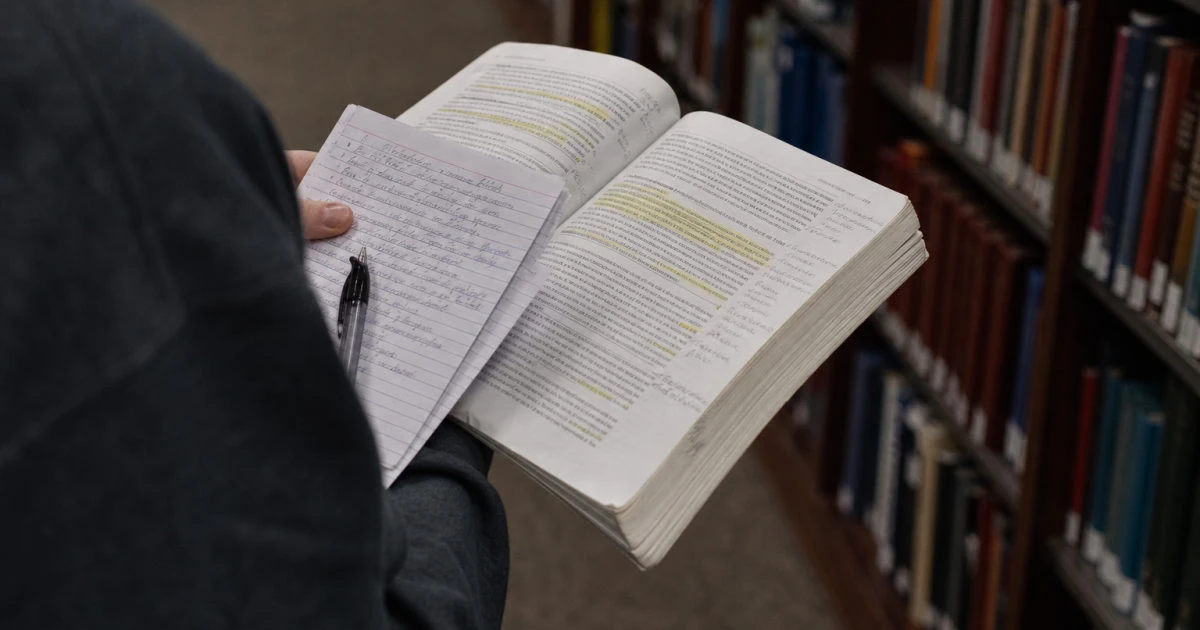
Set a start and end time, and decide what you will bring. A textbook with highlighted or annotated lines, a partly filled notebook, or question cards you have already written can all help. You can meet in a library aisle after finding the relevant books, but settle on the questions before everyone opens their materials.
Prepare just enough to participate
- Try the material alone first. Attempt a few problems or recall the main ideas without looking. You do not need polished answers; you need to know where you get stuck.
- Bring specific questions. Replace “I don't get this chapter” with “Why does this step follow from the previous one?” A specific question gives the group a place to start.
- Bring something to test. Write a few questions on used cards or mark possible exam prompts in your notes. Make sure the answers are not visible while someone tries to respond.
- Say what you can contribute. If you understand one topic well, offer to explain it. If you are unsure about most of the material, say so. The group can then plan practice rather than assume everyone is at the same point.
Spend meeting time retrieving, not rereading
Start with a question that everyone answers independently. Then compare answers and explain how you got there. This matters because hearing a confident explanation can make an idea feel familiar even when you could not produce the answer yourself.
For a problem-based subject, have everyone work the same problem before discussing the steps. If the answers differ, locate the first point where your reasoning splits. For a reading-heavy subject, close the book and take turns explaining a concept, giving an example, and answering a follow-up question. Open the source afterward to check what you missed.
Rotate who asks questions, who explains, and who checks the textbook or notes. A strong student should not become a permanent tutor, and a quieter student should not become a permanent audience member. You can use a simple rhythm: try a question alone, compare reasoning, check the source, then try a similar question without help.
Handle confusion without letting it take over
A disagreement is useful if you can identify what needs checking. Ask each person to point to the step, definition, or example behind their answer. Then consult the assigned material or ask your instructor later if the source does not settle it. Do not vote on which explanation sounds most convincing.
Give a difficult question a short, agreed period of attention. If you are still circling it, write down exactly what is unresolved and move on. You can return to it after the other questions or send it to your instructor. This keeps one confusing detail from consuming the entire session.
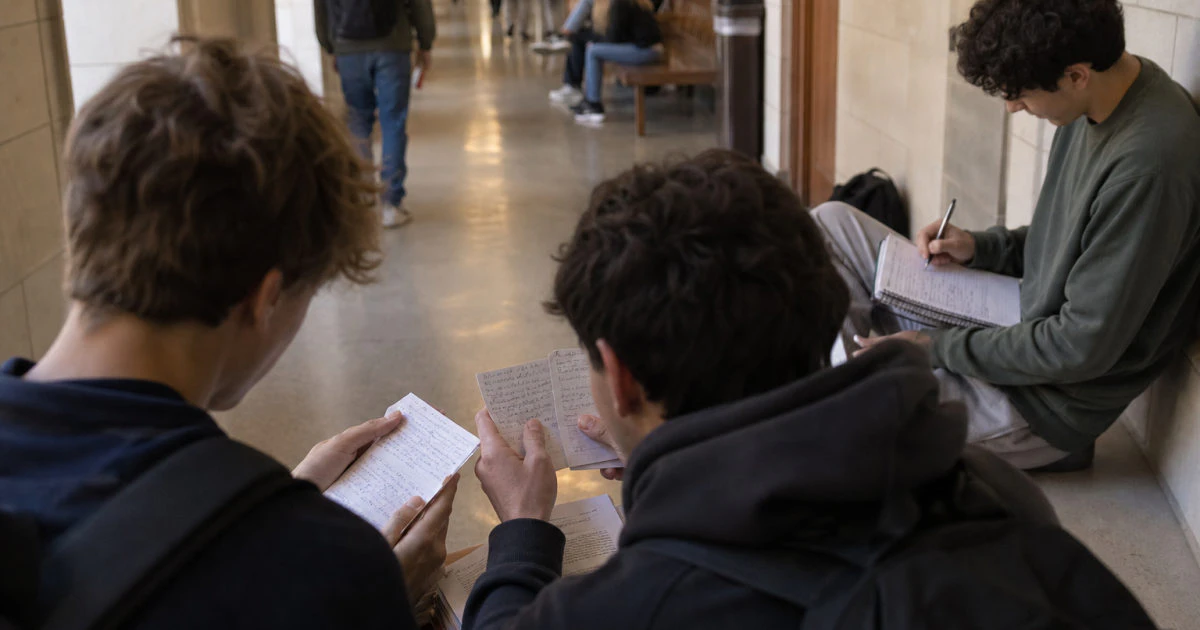
If you meet in a corridor outside a lecture hall, this can be as low-tech as two people holding used question cards while another notes the unresolved point in a partly filled notebook. You do not need a perfect setup. You need a way to record what you have not answered.
End with work you can do on your own
Use the last part of the session to name what each person can now explain and what still needs practice. Be specific: “I can describe the process, but I lose track of the second calculation” is more useful than “I need to review everything.” Write down any unanswered questions and who will check them.
Then pick a small solo task before the next meeting. You might retry a problem without notes, explain a concept from memory, or answer the cards you missed. If you plan another session, use those attempts to choose its focus. Do not schedule one just because the first meeting felt pleasant.
AtomAI can help with the preparation around a session: you can use Study to turn a document into flashcards, or upload a PDF in Read to summarize it and ask about a passage you found confusing. Still check the original material and try answering for yourself before bringing the question to the group.
Keep reading
- For more ways to test yourself between sessions, try this guide to active recall.
- If your group uses question cards, learn how to write ones that require a real answer.
- For problem-based courses, see how to practice recall without just memorizing worked solutions.
If you have a document to prepare before your next group session, try AtomAI Study to make flashcards you can test yourself with first. Try AtomAI free
Good group study does not require everyone to understand everything before they arrive. It does require a shared goal, an honest attempt at the material, and time spent answering rather than watching someone else answer. Prepare a few questions, test your thinking together, and leave with a short list of what to try alone. That gives the afternoon a purpose you can carry into your next study session.