
The night before an exam can make everything feel urgent. You may be tempted to reread every chapter, finish every practice question, or stay awake until you finally feel prepared. Usually, that feeling never arrives. There is always another topic you could review.
Useful night before exam revision is not about covering the entire course. It is about choosing the few tasks that will improve your readiness without leaving you exhausted. That means identifying weak spots, testing what you can recall, checking essential details, and stopping early enough to rest.
Start by deciding what not to study
Do not begin with the first page of your notes and work forward. You probably do not have enough time to treat every topic equally, and familiar material can consume an hour without improving your exam performance.
Instead, spend a few minutes making a short topic list. Mark each topic as secure, uncertain, or weak. Base this on what you can explain or solve without looking, not on how familiar the notes appear. Familiarity can be misleading: recognizing an answer on the page is different from producing it during an exam.
Focus most of your remaining time on uncertain topics that are likely to be tested and realistic to improve tonight. A completely unfamiliar unit may require more time than you have. In that case, learn its central definitions, formulas, arguments, or processes rather than trying to master every detail.
Make a small, specific plan
- Choose three priorities. Write down the three topics or skills that deserve most of your attention. A short list prevents anxious switching between tasks.
- Define a finish line. Replace vague tasks such as “review biology” with specific actions such as “explain cellular respiration from memory and answer five practice questions.”
- Set a stopping time. Work backward from when you need to sleep, allowing time to pack, get ready, and wind down.
- Remove optional work. Do not redesign notes, color-code entire chapters, or create a perfect study system. Use the materials you already have.
Use active recall, not comfortable rereading
The best use of night before exam revision is finding out what you can produce without help. Close the book and try to explain a topic aloud, write the steps of a process, define key terms, sketch a labeled structure, or solve a representative problem.
After each attempt, check your notes and correct only what was missing or inaccurate. Then test yourself again. This cycle gives you useful information: you learn which details are available under pressure and which ones still need attention.
Rereading can still help when you have genuinely forgotten the content, but keep it brief. Read enough to rebuild the idea, close the source, and retrieve it again. If you leave the notes open throughout your session, it becomes difficult to tell whether you know the material or are simply following what is in front of you.
Pick methods that match the exam
- For essay exams, practice outlining answers from memory. Include a clear position, main points, supporting evidence, and possible counterarguments.
- For math and problem-based exams, solve a small set of mixed problems without following worked examples. Check where your method breaks down, then repeat that type.
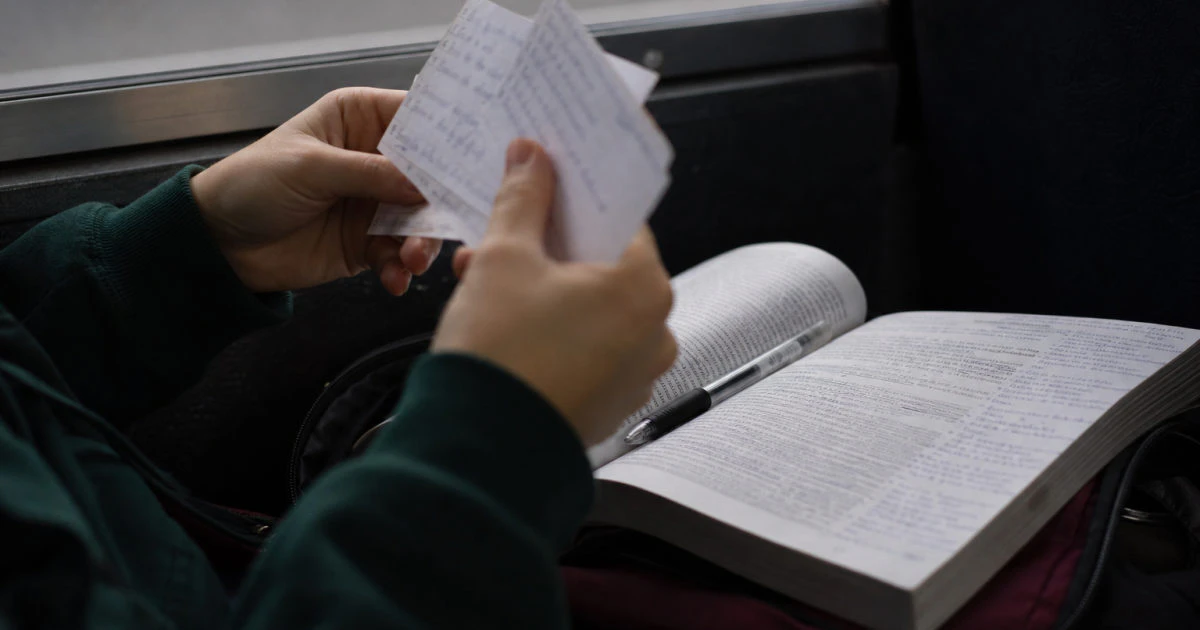
- For definition-heavy subjects, use written flashcards or a question list. Answer before turning over the card or checking the source.
- For diagram or process questions, recreate the structure or sequence from memory, then add missing labels and steps in a different color.
- For open-book exams, practice locating information quickly. Organize your materials and mark important sections, but do not assume the book can replace understanding.
What to do when you find a major gap
Discovering that you cannot answer a question can trigger panic, but the gap is useful information. Pause and identify its size. Are you missing one fact, confusing two ideas, or lacking the basic concept needed for the whole topic?
For a small gap, check the answer, rewrite it in simple language, and test it again a few minutes later. For a larger gap, find the shortest reliable explanation in your course materials. Focus on the core idea and one example. Then explain it without looking.
Avoid opening several textbooks, videos, and websites at once. Comparing multiple explanations can consume the rest of your evening. Start with the source most closely connected to your course, such as lecture notes, assigned readings, or a study guide from your instructor.
If a question is still taking too long, write it on a final-review list and move on. You can return if time remains. One difficult topic should not prevent you from reviewing several areas where a small amount of practice could help.
Know when more studying has stopped helping
As the evening continues, pay attention to the quality of your work. If you are repeatedly reading the same line, making mistakes you normally avoid, or forgetting what you checked a minute ago, extending the session may not be useful.
Sleep supports attention, recall, and clear thinking. You do not need a perfect evening routine, but you should protect a reasonable opportunity to rest. An extra stretch of tired rereading is not automatically better than arriving able to understand questions and manage your time.
Before you stop, do one quick pass through your priority list. Say the key ideas aloud, write essential formulas once from memory, or answer a few final prompts. This should be a check, not another full study session. Finish with a clear record of anything you want to glance at in the morning.
Prepare the practical details before bed
- Check the exam information. Confirm the start time, location, format, permitted materials, and any identification you need.
- Pack what you need. Put pens, pencils, a calculator if permitted, a charger if relevant, water, and other required items in your bag.
- Set alarms. Use a backup if missing the first alarm would create a serious problem.
- Plan your route. Allow for normal delays and decide when you need to leave.
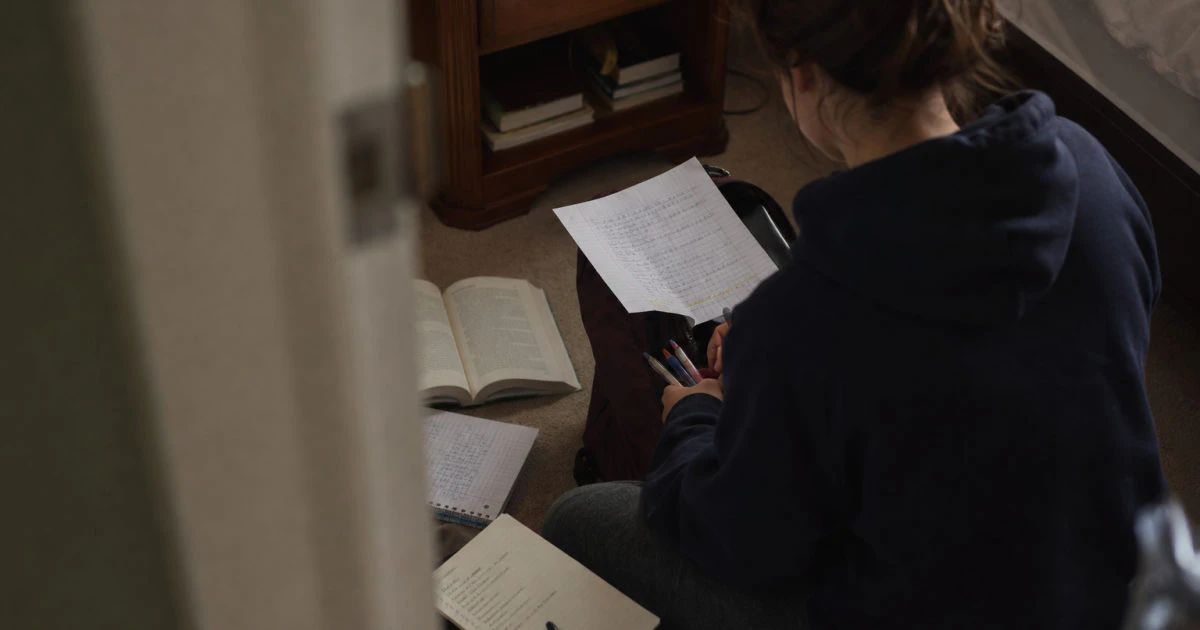
- Put away your materials. Leaving books spread around can make it harder to mentally finish the session. Keep only your short morning review sheet accessible.
Keep the morning review short
The morning is not the time to restart the entire course. Eat something if you normally do, drink water, and leave enough time to get to the exam without rushing. A calm arrival is more useful than squeezing in another chapter and reaching the room late.
Review one small sheet, a short group of flashcards, or your final-review list. Concentrate on formulas, definitions, sequences, or distinctions that benefit from a quick reminder. Test yourself rather than simply scanning the words.
Stop reviewing before the exam begins. Conversations with stressed classmates can introduce unfamiliar topics and make you doubt material you already know. If someone mentions something you did not study, do not assume it will determine the whole paper. Follow your plan and focus on reading the actual questions carefully.
Keep reading
- Learn how to use active recall when exam week is already underway
- Compare active recall with rereading before choosing how to spend your remaining time
- Make a realistic revision timetable for your next exam
If your course material is in a PDF, AtomAI can summarize it in Read mode, answer questions about it, or turn the document into flashcards in Study mode. Use those tools to create a focused review set rather than trying to process the whole document again. Try AtomAI free
Effective night before exam revision is selective. Decide what matters, retrieve it from memory, correct your gaps, and stop when the quality of your work falls. Then prepare the practical details and give yourself time to rest.
You may not finish everything, and that is normal. The goal is not to feel completely prepared. It is to use the remaining time deliberately so you can enter the exam rested, organized, and ready to work with what you know.