
You have an exam coming up, so you open your notes and read them again. The material looks familiar, which feels reassuring. But when you close the notebook and try to explain the topic without looking, much of it disappears.
This is the central problem in the active recall vs rereading comparison. Rereading puts information in front of you, while active recall asks you to produce that information from memory. Both can have a place in revision, but they do different jobs. If you use them as if they are interchangeable, you can spend hours studying without finding out what you actually know.
What active recall and rereading involve
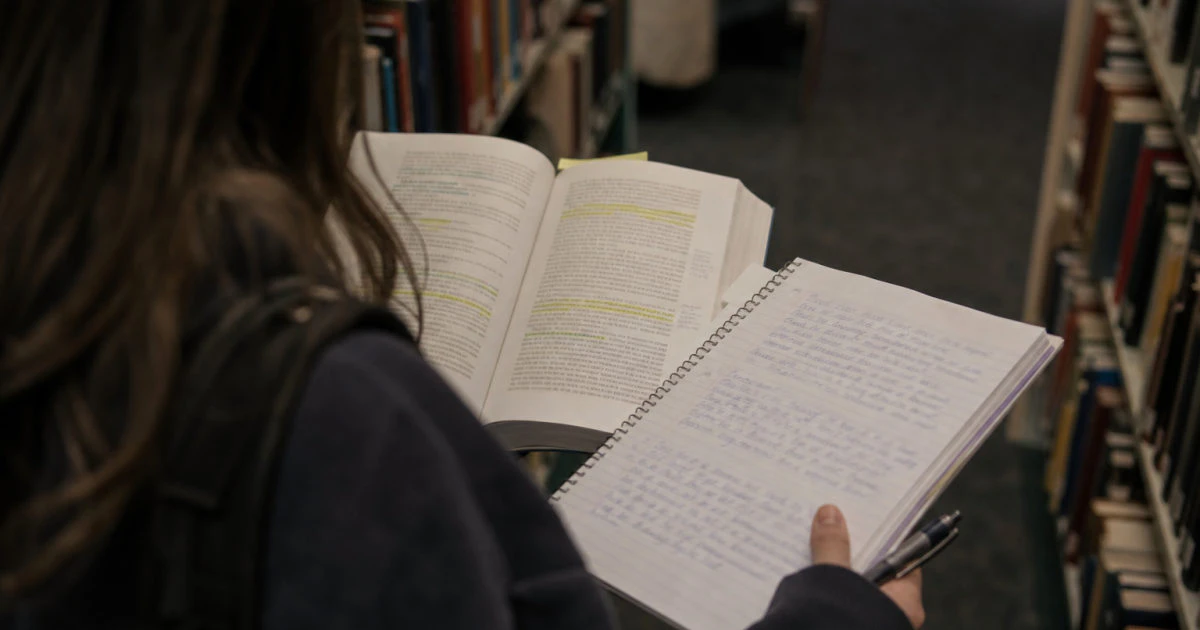
Rereading means returning to material you have already encountered. You might read a textbook chapter twice, review lecture slides, or go through highlighted notes before an exam. It is easy to begin because the information and its structure are already provided.
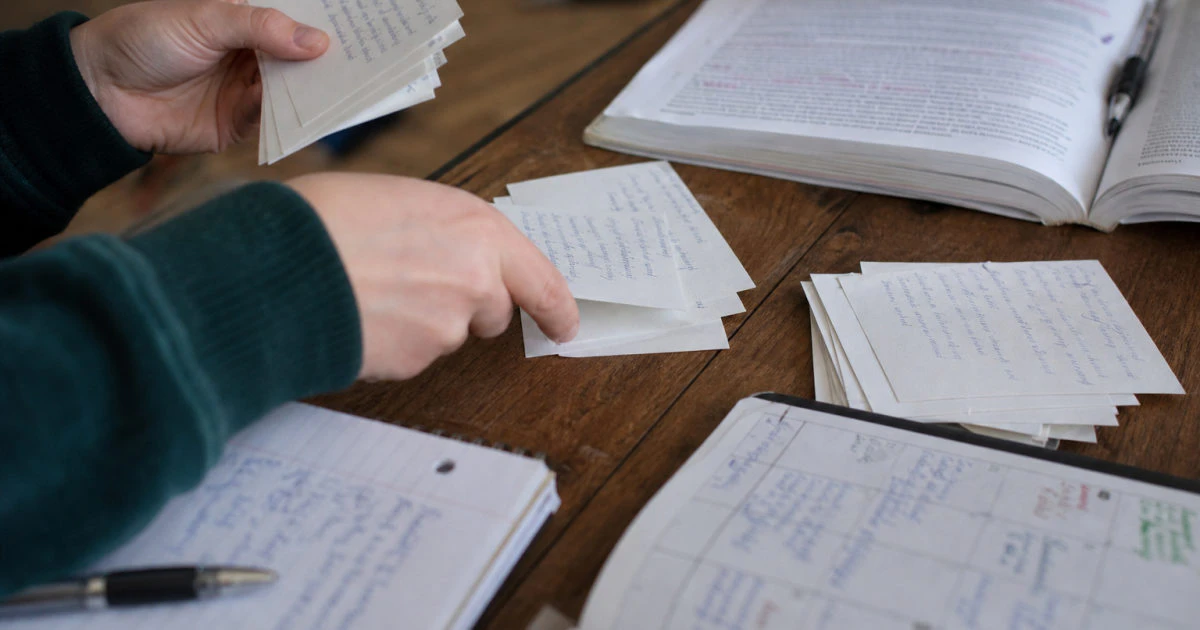
Active recall removes some or all of that support. You close the book and try to retrieve the information yourself. You might answer a question, write everything you remember about a topic, label a process from memory, explain a concept aloud, or use flashcards.
The difference is not simply that one method is harder. They require different mental actions. Rereading helps you recognize information when you see it. Active recall checks whether you can retrieve and use that information when it is absent. Most exams require the second ability, even when the question format includes multiple-choice answers.
Why rereading can feel more effective than it is
Rereading often feels productive because each pass becomes smoother. You recognize terms more quickly, remember where a definition appears on the page, and follow the author’s explanation with less effort. That increased fluency can be useful, but it can also create a false sense of mastery.
Recognition is not the same as independent recall. Seeing a familiar paragraph may make you think, “I know this.” A better test is whether you can close the source and explain the idea accurately, including its important details and limitations.
There is another practical issue: rereading does not expose gaps efficiently. If your eyes move over a section you only partly understand, you may not notice the weakness. A direct question forces you to commit to an answer. A missing step, mixed-up definition, or vague explanation becomes visible immediately.
This does not make rereading pointless. It is useful when you are encountering a difficult topic for the first time, checking the context around a detail, or reviewing your answer after a recall attempt. The problem is relying on repeated reading as your main method once you have understood the basic material.
What each method is good for
- Use rereading to build initial understanding. Read a section when the material is new, identify its main argument, and clarify unfamiliar terms before testing yourself.
- Use active recall to check memory. Close the source and answer a specific question without looking. This shows whether the information is available when you need it.
- Use rereading as feedback. After attempting an answer, return to the source to check errors, missing details, and points you expressed too vaguely.
- Use active recall to practice exam tasks. Adapt your prompts to the assessment. Explain causes, compare theories, solve problems, define terms, or outline essay arguments from memory.
- Use both to repair weak areas. If a recall attempt reveals that you do not understand a concept, reread that small section, work through it, and then test yourself again.
A fair active recall vs rereading comparison
If your goal is to understand a completely unfamiliar chapter, starting with active recall makes little sense because you have not learned the material yet. You need an initial reading, lecture, explanation, or worked example. Rereading may also help when a text is dense enough that one pass does not reveal its structure.
Once you understand the topic, however, active recall gives you more useful information about your readiness. It makes you produce an answer rather than follow one. That effort may feel slow and uncomfortable, but the difficulty is also diagnostic: it tells you what needs attention.
The best comparison is therefore not “always retrieve” against “never reread.” It is passive repetition against a cycle of reading, retrieval, checking, and correction. In that cycle, rereading supports learning, while retrieval does most of the testing.
Your subject also affects the form recall should take. For anatomy, you might label a structure from memory. For history, you might explain why an event happened and connect causes to consequences. For math, you need to solve problems without copying a worked example. For literature, you might reconstruct an argument and select supporting evidence. Flashcards are useful for some of these tasks, but active recall is broader than memorizing short answers.
How to replace passive rereading with a useful routine
Start with a small section rather than an entire module. Read until you can follow the basic idea, then turn the headings and learning objectives into questions. A heading such as “Causes of inflation” could become “What can cause inflation, and how does each cause affect prices?”
Next, close your materials and answer. Write bullet points, speak aloud, sketch a process, or solve a relevant problem. Do not check the source as soon as you hesitate. Give yourself enough time to search your memory and produce the best answer you can.
Then compare your response with the source. Mark missing ideas and correct errors in a different color. Avoid copying the whole page. Record only what would make your next answer more accurate or complete.
Return to the question later rather than repeating it immediately until the answer feels easy. A delayed attempt shows whether the answer remains available after your short-term familiarity has faded. Questions you answer well can appear less often, while weak questions should return sooner.
This routine makes active recall vs rereading less of an either-or decision. You read to understand, retrieve to test, and reread selectively to correct. Each step has a clear purpose.
Common mistakes that weaken active recall
The first mistake is making prompts too narrow. A card that asks for one isolated word may help with a definition, but it will not prepare you to compare ideas or build an argument. Mix short factual prompts with questions that require explanation, application, and connections.
The second is revealing answers too quickly. If you flip a card after a few seconds, you are mostly practicing recognition again. Pause, attempt the full answer, and only then check it.
The third is treating every answer as either right or wrong. An answer can be broadly correct but incomplete. Compare it with your notes and identify exactly what was missing. This makes the feedback useful instead of punitive.
The fourth is recalling incorrect material without checking it. Retrieval practice needs accurate feedback. Always compare your response with a reliable source, especially when you are learning technical terminology, formulas, dates, or closely related theories.
Finally, do not spend so long creating a perfect question bank that you avoid answering the questions. A rough list based on headings, lecture objectives, practice papers, and your own mistakes is enough to begin.
A simple plan for your next study session
Choose one topic and spend a short first pass understanding it. Break it into a few meaningful questions, then put the source away and answer each one. Check your work, note the gaps, and schedule another attempt for a later session.
If you are working from a PDF, you can also separate comprehension from recall. First summarize each major section in your own words. Then hide the document and answer questions about its claims, evidence, definitions, and connections. AtomAI’s Read mode can help you summarize a PDF and ask questions about it, while Study mode can turn a document into flashcards. You should still answer before checking and verify important details against the original source.
Judge the session by what you could produce without help, not by the number of pages you covered. That measure can feel less satisfying at first, but it gives you a clearer basis for deciding what to study next.
Keep reading
- put active recall into practice with a step-by-step revision method
- combine retrieval with a simple spaced repetition schedule
- read textbook chapters with clearer questions and exam priorities
Use AtomAI to work through a PDF, ask questions about difficult sections, or turn a document into flashcards for your next active recall session. Try AtomAI free
In the active recall vs rereading comparison, active recall is the better main method for checking whether you can retrieve and use what you have learned. Rereading still matters, but it works best as a supporting step: use it to understand unfamiliar material and correct mistakes after testing yourself.
You do not need to abandon reading or turn every sentence into a flashcard. Read with a purpose, close the source, attempt a meaningful answer, and check it carefully. That simple shift from recognition to retrieval makes your revision more honest and helps you focus on the material you have not mastered yet.