
A week is enough time to make solid progress on many assignments, but only if you decide what each day is for. Without a plan, research can consume the first few days, writing gets pushed to the end, and editing becomes whatever you can manage before the deadline.
A useful assignment week plan works backward from submission. It separates understanding, research, outlining, drafting, and editing so that you are not trying to do everything at once. It also includes some spare time because readings take longer than expected, arguments change, and life interrupts even careful schedules.
This guide gives you a practical seven-day structure. Adjust the workload to fit your assignment, available time, and deadline rather than treating every day as an equal block.
Start with the deadline and the finished product
Before assigning tasks to days, work out exactly what you need to submit. Read the assignment brief, marking criteria, formatting instructions, and referencing requirements. Note the word count, required sources, file format, and submission time. If the question contains terms such as compare, evaluate, or analyze, identify what that instruction requires you to do.
Turn the brief into a short definition of done. For example: a 2,000-word essay with a clear argument, at least eight appropriate sources, in-text citations, a reference list, and a final proofread. This gives your assignment week plan a concrete destination.
Next, estimate how many usable hours you actually have. Check classes, work shifts, travel, appointments, and other deadlines. A day with one free hour should not carry the same workload as a day with four. Put demanding tasks, such as outlining or writing a difficult section, into your best concentration periods. Save lower-energy jobs, such as formatting references, for shorter sessions.
Break the assignment into visible tasks
- Understand the task. Rewrite the question in your own words, identify the required output, and list anything you need to clarify with your instructor.
- Find and select sources. Search for relevant material, check whether each source genuinely helps, and record the information needed for citations as you go.
- Read with a purpose. Read for evidence, definitions, debates, and examples related to your argument. Avoid taking notes on material that does not help answer the question.
- Build an outline. Give each section a job. Add the main claim, supporting evidence, and connection to the assignment question under each heading.
- Draft in sections. Write one manageable part at a time. You do not have to start with the introduction if a body section feels clearer.
- Revise and edit. Check the argument and organization first, then improve paragraphs and sentences. Proofreading should come after major changes.
- Prepare the submission. Confirm the word count, references, formatting, file name, and upload requirements before the final deadline.
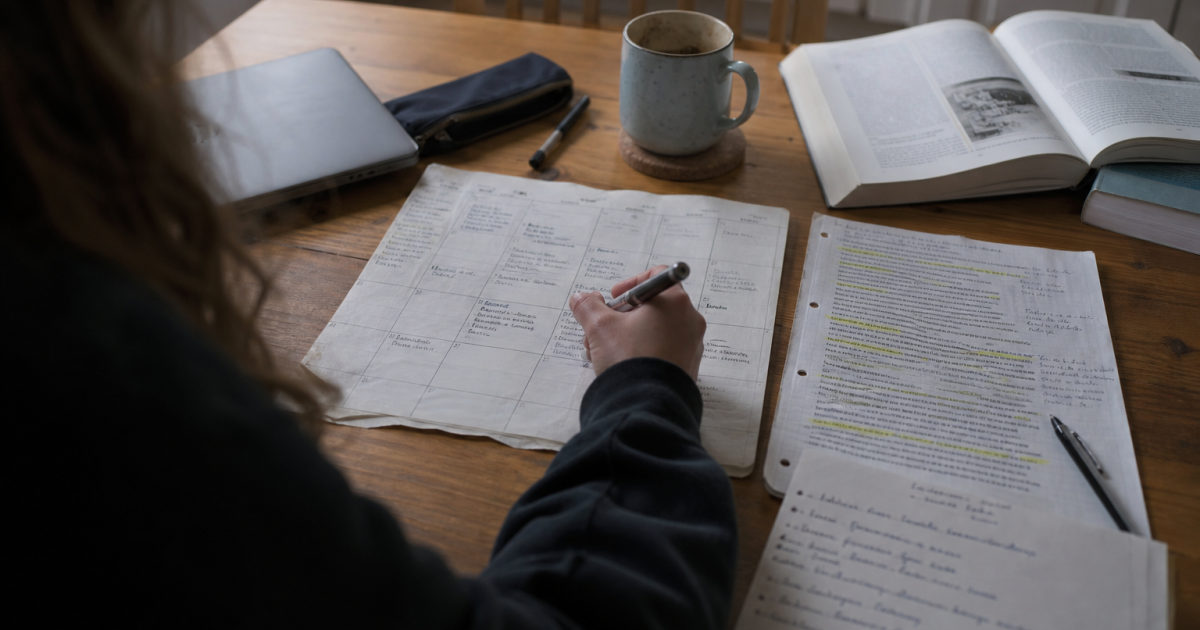
Use this seven-day assignment week plan
The following schedule assumes that day seven is your submission day. If you must submit earlier in the day, treat day six as your true deadline. You can also combine lighter stages when the assignment is short or extend research and drafting when the task is more complex.
Day one is for understanding and setup. Read the brief carefully, inspect the marking criteria, calculate your available time, and create a task list. Do a quick search to check that enough useful source material exists. If the question is unclear, ask for clarification now rather than guessing all week.
Day two is for focused research. Gather likely sources and evaluate their relevance before reading everything in detail. Save full citation information immediately. By the end of the day, you should know the main ideas or debates you may use, even if your argument is not final.
Day three is for reading, notes, and a working position. Extract useful evidence from your strongest sources and record where each point came from. Then write a one- or two-sentence answer to the assignment question. This working answer can change, but it gives your outline a direction.
Day four is for outlining and starting the draft. Plan the order of your argument and place evidence under the relevant sections. Start writing once the structure is usable rather than polishing the outline indefinitely. Aim to complete at least one substantial section.
Day five is your main drafting day. Work through the body of the assignment in focused blocks. Leave brief notes such as “check source” or “improve transition” when a small problem threatens to stop your momentum. Resolve those notes later instead of interrupting every paragraph.
Day six is for finishing and revising. Complete any missing sections, then read the draft for argument, relevance, and logical order. Ask whether every paragraph contributes to your answer. Make structural changes before spending time adjusting individual words.
Day seven is for final checks and submission. Proofread slowly, verify citations against the reference list, check formatting, and read the assignment instructions again. Upload the file with enough time to handle a connection problem or submission error.
Give each day a minimum target
- Day 1: A clear interpretation of the brief and a realistic calendar.
- Day 2: A selected set of relevant sources with citation details saved.
- Day 3: Usable notes and a one- or two-sentence working answer.
- Day 4: A complete outline and the first drafted section.
- Day 5: A rough but mostly complete body draft.
- Day 6: A complete draft with its major revision finished.
- Day 7: A proofread, correctly formatted file submitted before the deadline.
Plan by output, not just by time
“Work on essay for three hours” is difficult to judge because you can spend the entire session searching, rearranging notes, or adjusting a title. A better task describes what should exist when the session ends: “select five useful sources,” “outline three body sections,” or “draft the section comparing the two theories.”
Time blocks still matter, but pair each one with an output. Decide what you will produce, estimate how long it should take, and stop when you reach a sensible boundary. If the task repeatedly exceeds your estimate, reduce the scope of the next session instead of filling your entire schedule with unfinished work.
Your assignment week plan should also include a minimum version for difficult days. If you cannot complete a full drafting session, you might write one paragraph, organize the evidence for the next section, or fix three incomplete citations. A reduced task keeps the project moving without pretending that every day will go perfectly.
Protect time for revision and problems
The most common planning mistake is allowing research and drafting to occupy the entire week. Revision is not an optional final polish. It is where you test whether the assignment actually answers the question and whether the evidence supports your claims.
Set a research cutoff before you begin. You can return for a missing fact or source, but do not continue broad searching once you have enough material to build an argument. More sources do not automatically improve an assignment, especially when you have no time to understand or use them properly.
Keep some backup time unassigned. Even one open block can absorb a difficult reading, a weak section that needs rewriting, or a technical problem. If nothing goes wrong, use that block for a second proofread or an earlier submission.
When you fall behind, do not simply move every unfinished task to the following day. Review the remaining work and prioritize what affects the final result. Finish the core argument before refining the introduction. Use fewer strong examples rather than many poorly explained ones. Correct missing citations before adjusting minor formatting details.
AtomAI can help with particular steps without making decisions for you. In Read mode, you can upload a PDF, get a summary, and ask questions about it. Chat mode also lets you ask questions and attach PDFs or images. In Write mode, you can review or improve your own draft. Check any generated explanation against your source material, follow your course rules on AI use, and keep the final argument and wording under your control.
Keep reading
- start an assignment you have been avoiding
- structure your essay around a clear argument
- make sense of referencing styles without the jargon
Use AtomAI to ask questions about your assignment, work through uploaded readings, or review a draft during your planned study sessions. Try AtomAI free
A good assignment week plan does more than divide seven days into study blocks. It gives each day a clear result, limits research, protects revision time, and leaves room for problems.
Build the plan backward from submission, match the workload to your real availability, and review your progress at the end of each day. If you miss a target, adjust the remaining plan based on priority rather than trying to squeeze two full days into one. The goal is not a perfect schedule. It is a finished assignment that has had enough time for careful thinking, writing, and revision.