
A one-page chapter summary should give you the structure and essential meaning of a chapter without becoming a smaller copy of it. When you return to the page before an exam, it should help you reconstruct the main argument, explain the important ideas, and identify anything you still need to practice.
The difficult part is deciding what deserves space. If you try to record every definition, example, and supporting detail, your page will become crowded and hard to review. The solution is to summarize a textbook chapter in stages: understand the chapter first, select what matters, compress it, and then check the result from memory.
Start by finding the chapter's structure
Do not begin writing your final page as soon as you open the chapter. First, scan the title, introduction, section headings, diagrams, boxed definitions, conclusion, and any review questions. This gives you a map of the material before individual details compete for your attention.
Next, read the chapter with one question in mind: what is this chapter trying to explain, compare, prove, or teach? Write a rough answer in one or two sentences. It does not need to be polished. This statement gives your summary a center and helps you judge whether a detail supports the chapter's main purpose.
Treat headings as clues rather than ready-made notes. For each major section, ask what new idea it adds. A heading such as “Causes of Inflation” tells you the topic, but your summary needs to state what those causes are and how they work. Write that meaning in your own words before deciding whether it belongs on the final page.
Choose material that earns its place
- Main argument: Record the central claim, process, or question that holds the chapter together. If you cannot identify it, reread the introduction and conclusion before taking more notes.
- Major ideas: Include the few concepts needed to explain the chapter. These usually match its main sections, but related sections can often be combined.
- Essential definitions: Keep terms that have a precise course-specific meaning. Define them briefly in your own words rather than copying a full textbook sentence.
- Relationships: Show causes, effects, stages, contrasts, or connections among ideas. These relationships are often more useful than isolated facts.
- Selective evidence: Use an example, date, formula, case, or quotation only when it helps you understand or apply a central idea.
- Likely assessment material: Prioritize ideas emphasized in lectures, learning objectives, review questions, or assignment instructions, while avoiding unsupported guesses about what will appear on an exam.
Build the page around a clear hierarchy
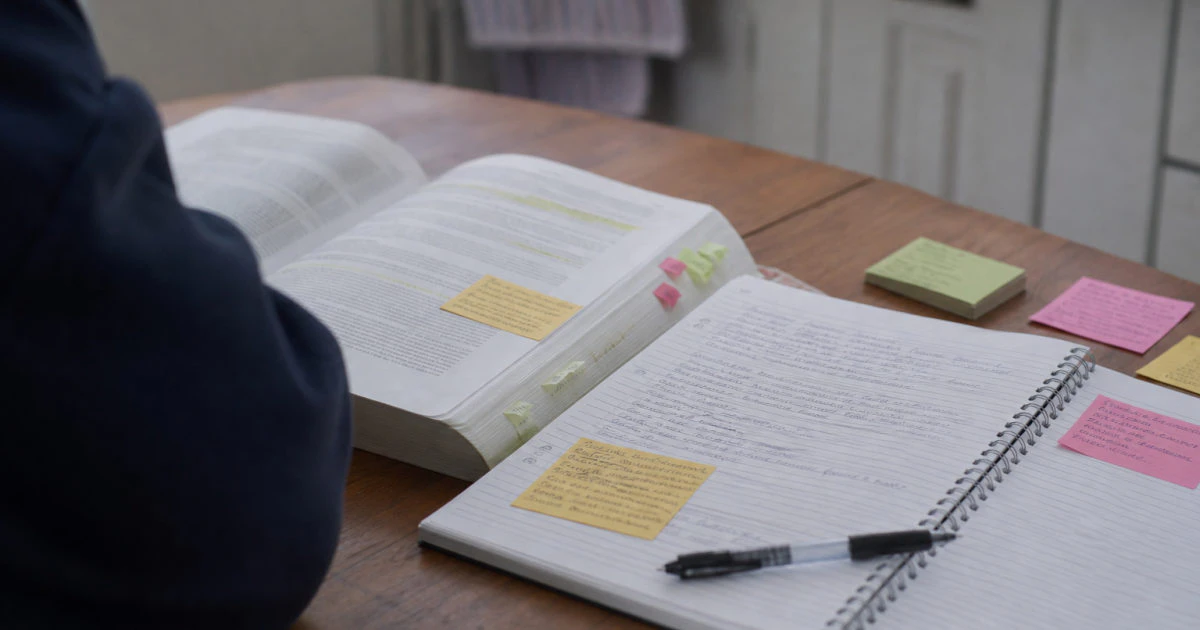
Once you understand the chapter, close the textbook and sketch the page from memory. Put the chapter's central idea at the top. Divide the remaining space among three to six major ideas, depending on the chapter. Under each one, add only the definitions, relationships, and evidence needed to explain it.
Use a hierarchy that is obvious at a glance. Headings should represent major ideas, while bullets underneath should explain them. Indentation, arrows, numbering, and restrained use of color can show which details belong together. The goal is not decoration. Every visual choice should help you see the chapter's organization.
Leave a small section for questions or weak areas. For example, you might note that you can define a term but cannot explain how it connects to the chapter's argument. This keeps uncertainty visible instead of hiding it inside polished notes.
Use a simple one-page layout
- Top section: Write the chapter title, its central question, and a two-sentence statement of its main argument or purpose.
- Middle section: Give most of the page to the major ideas. Use short bullets that explain meaning rather than single words that may become confusing later.
- Connection space: Add arrows or brief linking phrases such as “causes,” “depends on,” “contrasts with,” or “leads to” where relationships matter.
- Bottom section: Reserve a narrow area for essential terms, formulas, dates, exceptions, and questions you need to revisit.
Compress without removing the meaning
To summarize a textbook chapter well, shorten the language rather than deleting the logic. Replace long explanations with direct statements, but keep the words that show relationships. “Lower supply raises price when demand remains stable” is more useful than separate bullets saying “lower supply,” “price increase,” and “stable demand.”
Remove repeated examples, background stories, transition sentences, and details that simply restate a point. Keep an example only if you would struggle to explain the concept without it. If the chapter gives several similar cases, choose the clearest one and label what it demonstrates.
Avoid shrinking your handwriting just to fit more material. A page packed with tiny text is technically one page but is not an effective summary. If you run out of space, rank the content again. Ask whether each line helps you explain the main idea, distinguish related concepts, solve a problem, or answer a plausible course question. If it does none of those things, remove it.
Paraphrasing also tests understanding. When you cannot express an idea simply, return to the relevant paragraph and identify the subject, the claim being made, and the reason or evidence supporting it. Then try again without looking.

Test the page before calling it finished
Put the textbook and summary aside for a few minutes. Then turn the summary over and explain the chapter aloud or on scrap paper. Try to state the central argument, name the major ideas, define key terms, and describe the connections among them.
Now check your explanation against the page. If you forgot an important concept that is already there, the layout may not give it enough emphasis. If you could not explain a point even with the summary visible, its wording may be too vague. If a major idea is missing entirely, add it by removing a lower-priority detail rather than squeezing it into the margin.
Finally, compare the page with the chapter's learning objectives, conclusion, and review questions. Your summary does not need to answer every possible question, but it should contain enough structure for you to explain the chapter without rereading it from the beginning.
The page can also become a revision tool. Cover individual sections and recall them, turn headings into questions, or convert important prompts into flashcards. This is more useful than repeatedly reading the page because it requires you to retrieve and use what you learned.
Keep reading
- Learn how to read a chapter with likely assessment material in mind.
- Take textbook notes without copying every line into your notebook.
- Turn the finished summary into flashcards that require active recall.
If your chapter is available as a PDF, you can upload it to AtomAI in Read mode to generate a summary and ask questions about unclear sections. Compare the result with your own page rather than accepting it automatically, and use Study mode if you want to turn the document into flashcards. Try AtomAI free
A useful one-page summary is selective, structured, and written for recall. Start with the chapter's purpose, organize the major ideas into a clear hierarchy, keep only the details that support understanding, and preserve the connections among concepts.
Most importantly, test the page without the textbook. If it helps you reconstruct and explain the chapter, it is doing its job. If it only looks organized while leaving you unable to recall the material, revise the content rather than adding more of it.