
A deadline that says “Research Paper Due — 7 Days” can make your stomach drop. You may immediately picture late nights, too much caffeine, and dozens of open tabs. But with the right research paper writing tips, you can use that week more deliberately.
Writing a strong research paper in seven days is challenging, but possible. The key is not forcing yourself to write faster. It is dividing the work into manageable stages so that research, outlining, drafting, editing, and citations each have their place.
This day-by-day plan takes you from a blank page to a finished paper without relying on one stressful final push. You can also use an AI research assistant to summarize sources, work through writer’s block, and review your draft while you remain responsible for the research and argument.
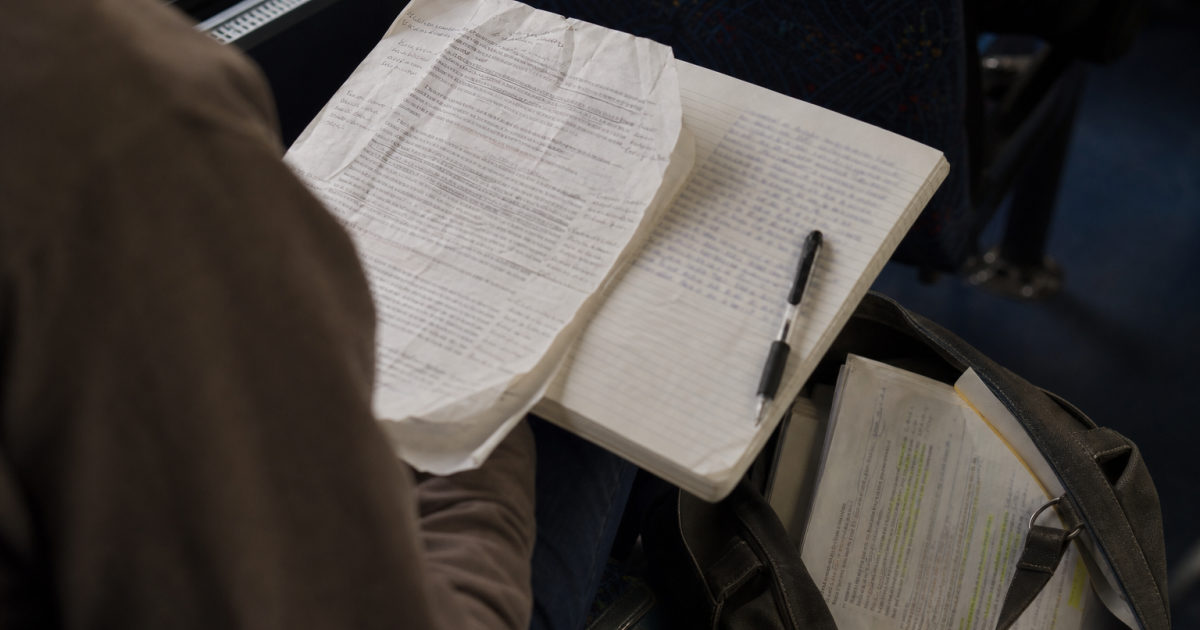
Days 1 and 2: Research paper writing tips for research and outlining
The hardest part of a research paper is often getting started. Use the first two days to build a strong foundation rather than trying to draft immediately. Writing without a plan is like building a house without a blueprint: you may make progress, but you are likely to create more work for yourself later.
Step 1: Deconstruct the prompt and brainstorm
Begin by reading the assignment prompt carefully. Underline its keywords and make sure you understand exactly what your professor is asking you to do. Pay attention to the expected subject, type of argument, length, and any other requirements included in the prompt.
Once you understand the assignment, brainstorm possible topics. Do not censor your ideas at this stage. The point is simply to get several options onto the page so you have something concrete to consider.
If you are stuck for ideas, use a chatbot to explore different angles. For example, if the general topic is “The impact of social media on society,” you could ask: “What are some specific research questions about the psychological effects of Instagram on adolescents?” The response can help you narrow a broad subject into a question you can reasonably investigate.
Step 2: Gather your sources
After choosing a direction, start looking for credible sources. Search your university’s online library, Google Scholar, or JSTOR for relevant articles, studies, and books. At this point, the goal is not to read every source from beginning to end. You are building a useful collection that can support your paper.
This stage can quickly become overwhelming. You might download ten dense PDFs and feel defeated before you have read the first page. Instead of trying to work through all of them immediately, use an AI tool to identify their main points. You can upload PDFs to AtomAI’s Read mode to receive summaries and ask questions about the documents. This can help you decide whether a source is relevant to your argument before spending an hour reading it closely.
Step 3: Craft a thesis and outline
Once you have sources and a clearer sense of your topic, write a strong thesis statement. Your thesis is the paper’s central argument condensed into one or two sentences. If you need help shaping it, see the guide from the University of Wisconsin–Madison’s Writing Center.
Next, create your research paper outline. Treat it as a roadmap for the draft. Use your main arguments as headings, then place the evidence you plan to use beneath each one. A clear outline turns the next stage into a process of developing points you have already organized rather than inventing the entire paper as you write.
Days 3, 4, and 5: Draft one section at a time
With a solid outline, drafting becomes a matter of filling in the structure you have already created. These three days are your main writing period. This is also where academic writing help can be useful when you encounter writer’s block or have trouble putting an idea into words.
Do not aim for perfection in the first draft. Your immediate goal is to get your ideas onto the page. This rough version is sometimes called a “vomit draft” because it prioritizes completeness over polish. You will have time to reorganize sentences, improve transitions, and correct mistakes during the final two days.
Three ways to make drafting easier
- Tackle one section at a time Start with the section you feel most confident about rather than assuming you must write the paper in order. Completing a section gives you visible progress and can make it easier to continue.
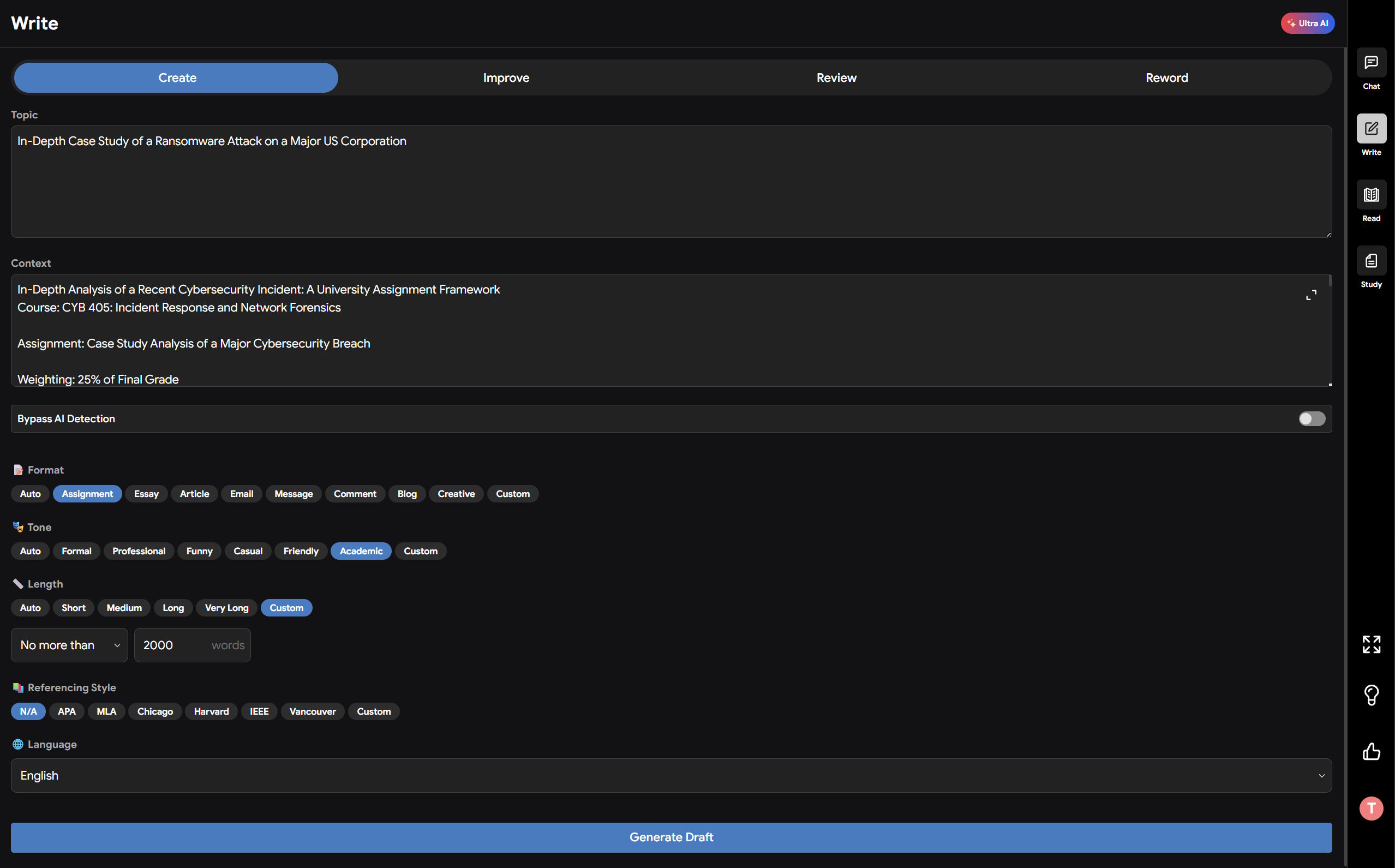
- Use an AI writing partner If you are staring at a blinking cursor, use AtomAI’s Write mode. Give it a focused prompt taken from your outline, such as: “Write a paragraph explaining the main causes of the French Revolution, mentioning economic disparity and Enlightenment ideas.”
- Paraphrase and refine If you find a useful quotation but do not know how to integrate it, paste it into the tool and ask for a paraphrase. This can help you express a complex point in your own voice and avoid accidental plagiarism.
Keep control of the argument
Using AI for faster drafting is not about handing over the assignment. You still guide the research, choose the evidence, and build the argument. The tool helps you structure your thoughts and articulate them clearly, particularly when you know what you want to say but are having trouble starting a paragraph.
Days 6 and 7: Edit, cite, and proofread
By day six, you should have a complete draft. The main writing is done, but the paper still needs a careful final pass. Use the remaining two days to improve its clarity, flow, citations, grammar, and formatting.
Step 1: Read the paper aloud
Reading your paper aloud may feel awkward, but it is one of the best ways to notice clumsy phrasing and grammatical errors that your eyes might skim over. If a sentence is difficult to say or understand, it probably needs to be revised.
Step 2: Check for cohesion
Ask whether the paper moves logically from one point to the next. Check that your transitions are smooth and that each paragraph supports the larger argument. This is the time to reorganize paragraphs and strengthen the connections between your ideas.
You can also use the Review preset in AtomAI’s Write mode to get suggestions for improving the draft’s flow and structure.
Step 3: Finish the citations
Do not leave all your citations until the final few minutes. Keep track of your sources as you write, then use this stage to confirm that each one is cited correctly. Whether the assignment requires MLA, APA, or Chicago style, apply that style consistently throughout the paper.
The Purdue Online Writing Lab provides free guidance for checking citation formats and research conventions.
Step 4: Complete the final proofread
Read the paper one last time and look for typos, spelling mistakes, and formatting problems. Confirm that you have met the word count and followed every instruction in the assignment prompt. This final check helps you catch small issues before you submit the paper.
If the deadline is close, use AtomAI to summarize PDFs, ask questions about your sources, draft from your outline, paraphrase passages, or review the structure of your paper. Start drafting your paper for free. Try AtomAI free
Writing a research paper in a week does not have to mean seven days of constant stress. Spend the first two days understanding the assignment, gathering sources, shaping a thesis, and building an outline. Use days three through five to complete a rough draft, then reserve the final two days for editing, citations, and proofreading.
A structured plan gives every part of the process enough attention and reduces the risk of a last-minute scramble. You still need to do the thinking and make the final decisions, but the right tools can help you move through difficult parts of the work and produce a paper you are proud to submit.