
A big assignment can sit on your task list for days while you answer messages, reorganize your notes, or promise yourself you will start tomorrow. The longer you avoid it, the more threatening it feels. Eventually, you are dealing with the work and the stress of lost time.
Assignment procrastination is rarely solved by telling yourself to work harder. You need to make the assignment smaller, clarify what to do next, and create a routine that does not depend on feeling motivated. The goal is not to complete everything in one heroic session. It is to make starting easy enough that you can begin today.
Find out what you are actually avoiding
Before making a schedule, work out why you have not started. You might not understand the question, know which sources to use, or feel confident that your first attempt will be good enough. You might also be estimating the assignment as one enormous task rather than a series of manageable actions.
Open the assignment brief and read it once without trying to solve anything. Mark the required format, word count, deadline, assessment criteria, and any instructions about sources. Then write down every point that is unclear. Questions such as “Do I need to compare both theories?” or “How many examples should I discuss?” are more useful than the vague thought that the assignment is difficult.
If the instructions remain unclear, ask your teacher or lecturer early. A short clarification can prevent hours of avoidance or work in the wrong direction. If perfectionism is the problem, give yourself permission to create a rough version. A weak paragraph can be revised; a paragraph that exists only in your head cannot.
Turn the assignment into visible next steps
- Start with setup, create the document, add the title, copy in the question, and save the file in the right folder. This is real progress, even if you have not written a paragraph yet.
- Separate research from writing, list the topics you need to investigate and give each one a clear stopping point. For example, find three useful sources for one section rather than searching until you feel completely informed.
- Build a rough outline, write section headings and add one or two questions under each. Your outline does not need polished sentences. It only needs to show what each section is supposed to do.
- Define the next physical action, replace “work on assignment” with something specific, such as reading two pages, summarizing one source, or drafting the first 150 words.
Plan work sessions you can realistically start
A schedule fails when it assumes you will suddenly become a different person. Do not plan a four-hour evening session if you are usually tired after classes or work. Look at the time and attention you actually have, then assign smaller tasks to those periods.
You might reserve 25 minutes in the morning to review a source, 40 minutes between classes to update your outline, and an hour in the evening to draft one section. Short sessions are useful because they reduce the cost of starting. They also make it easier to continue the next day without feeling that every session must be a major event.
Add the sessions to your calendar as appointments and decide where you will work. “Tuesday at 4 p.m. in the library: draft the comparison paragraph” gives you fewer decisions to make than “write sometime Tuesday.” Include buffer time before the deadline for missing sources, difficult sections, formatting, and revision.
Try to set a personal deadline at least a little earlier than the official one. The point is not to pretend the real deadline has changed. It is to protect time for checking your argument and fixing problems without working through the final night.
Use a simple start routine
- Remove one obvious distraction, put your phone out of reach, close unrelated tabs, or choose a quieter place. You do not need perfect conditions, only fewer easy escape routes.
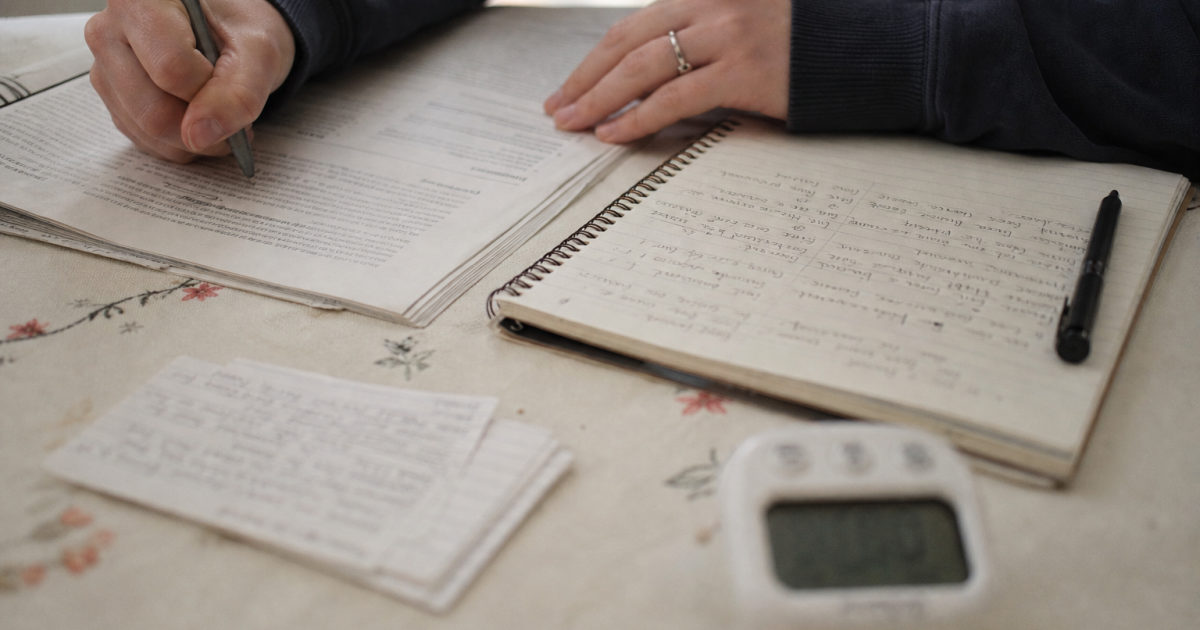
- Set a short timer, commit to working for ten minutes if resistance is high. When the timer ends, you can stop, but you may find it easier to continue once the task is underway.
- Leave yourself a restart note, at the end of each session, write the exact next action at the top of your notes. This prevents tomorrow's session from beginning with another round of planning.
Make progress before trying to make it good
Assignment procrastination often grows when every sentence feels final. Separate drafting from editing so you are not generating ideas, checking evidence, improving style, and fixing punctuation at the same time.
During a first draft, use placeholders when necessary. Write “[add example here]” or “[check this date]” and keep moving. If a sentence feels awkward, state the idea plainly and revise it later. Your first task is to produce material that can be improved.
When you return to edit, work in passes. First check whether each section answers the assignment question. Next check the order of your points and the evidence supporting them. Then improve individual sentences, citations, spelling, and formatting. Editing in layers is usually clearer than repeatedly polishing the opening paragraph while the rest remains unwritten.
Keep a short list of completed actions as well as unfinished ones. Recording that you found two sources, drafted a section, or checked your references helps you see that the assignment is changing. This matters when slow progress makes it feel as though nothing is happening.

Recover quickly when you fall behind
Missing a planned session does not mean the plan has failed. The danger is turning one missed session into several days of avoidance because you feel guilty. Instead, review the remaining time and reduce the plan to what matters most.
Start by protecting the core requirements in the assignment brief. A complete, direct response is more important than extra reading or elaborate formatting. Decide which sections still need evidence, which can be shorter, and which optional ideas can be removed.
If the deadline is close, work in order of importance rather than in the order the ideas occurred to you. Draft the central argument and required sections first. Leave the introduction and conclusion until the structure is clearer. If you have serious circumstances affecting your work, contact the appropriate teacher, lecturer, or student support service instead of waiting until after the deadline.
After submitting, take a few minutes to note what caused the assignment procrastination. Perhaps the task was unclear, your schedule was too ambitious, or you spent too long searching for sources. That information can help you plan the next assignment more accurately.
A practical plan for today
- Spend five minutes, opening the brief and highlighting the required outcome, deadline, and assessment criteria.
- Spend ten minutes, turning the assignment into a list of research, drafting, and editing tasks.
- Choose one task, that you can finish in a short session, such as finding one source or drafting one subsection.
- Schedule the next session, with a time, place, and specific action before you stop working today.
If uncertainty is feeding your assignment procrastination, AtomAI can help you get the material into a workable form. In Chat, you can attach an image or PDF of the assignment and ask questions about it. You can use Write to draft, improve, review, or paraphrase text, and Read to summarize a PDF or ask about its contents. Use the output as support for your own thinking, and check it against the assignment instructions and original sources. Try AtomAI free
Beating assignment procrastination does not require a sudden burst of motivation. It requires a clear next step that feels small enough to begin. Read the brief, break the work into actions, schedule realistic sessions, and allow the first draft to be imperfect.
Do not wait until you feel ready. Open the assignment, choose one task that takes ten minutes, and start there. Once the work is visible, it becomes easier to judge, revise, and finish.