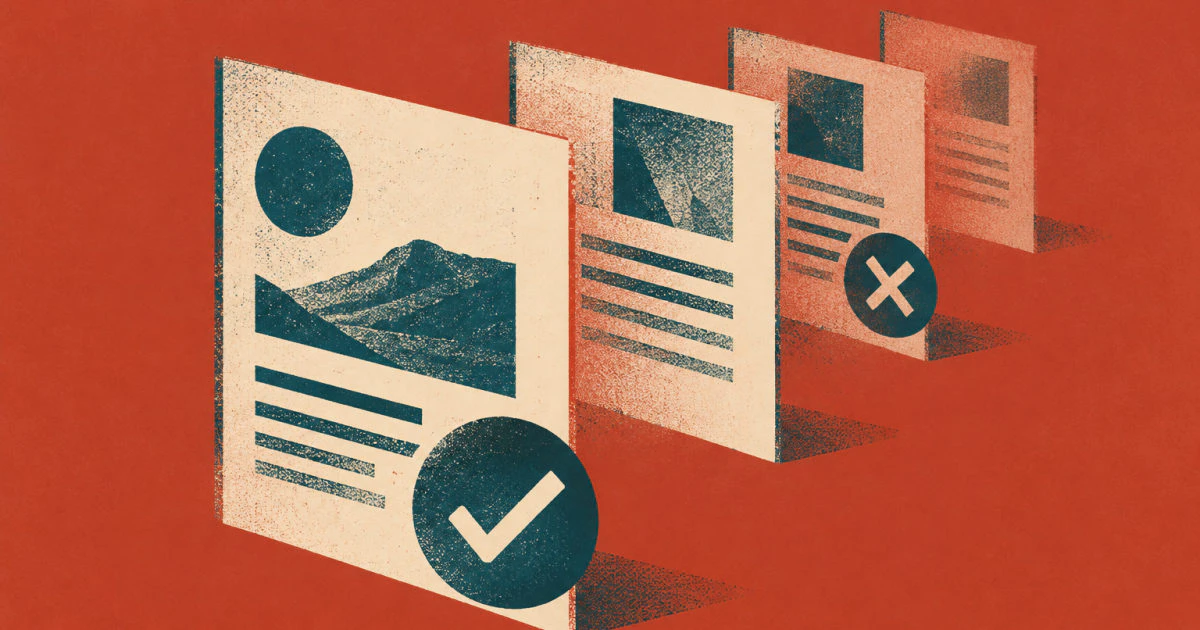

You find an article that says exactly what you want to argue. It has a named author, a clean layout, and links to research. Then you follow one of those links and realize the study measured something different from what the article claims. The page looked credible, but it was not good evidence for your sentence.
The best way to learn how to tell if a source is credible is to start with the claim you want to cite, not with the look of the website. Then check who is making the claim, what evidence they offer, and whether that evidence supports the words you plan to write.
Start with the sentence you want to support
Write the claim in your own words before you decide what to cite. Suppose your draft says, “Later library hours improve student grades.” A campus announcement can confirm that the library changed its hours. A survey can tell you why some students wanted it to stay open. Neither tells you whether grades improved because of the change.
Check your assignment instructions at this point, too. If your instructor requires peer-reviewed research, the announcement does not meet that requirement, even if it accurately reports the new hours. If you are analyzing how the college explained its decision, though, the announcement is a primary source for that question.
Try underlining the exact sentence you want to support in your handwritten draft. Beside it, write what kind of evidence you would need. If you cannot describe that evidence yet, your claim may be too broad.

Check who is behind the source
Look up the author and publisher outside the page you are evaluating. Search the author’s name with their institution or field and see whether their experience matches the topic. A campus administrator can speak directly about a change to library hours, but that role alone does not make them an expert on what caused grades to rise or fall.
For an unsigned page, look for an organization that takes responsibility for it. An official policy page does not need a named author to tell you what the policy says. For a journal article, check the article type: a peer-reviewed journal can publish editorials and letters as well as research. For a news story, look for named sources, links to documents, and any correction attached to the story.
Ask why the source was published. A company selling a study planner might report a real customer survey, but its readers still need to know who answered, what they were asked, and which results were left out. A financial interest is a reason to inspect the evidence, not a reason to assume every claim is false.
Follow the claim back to the evidence
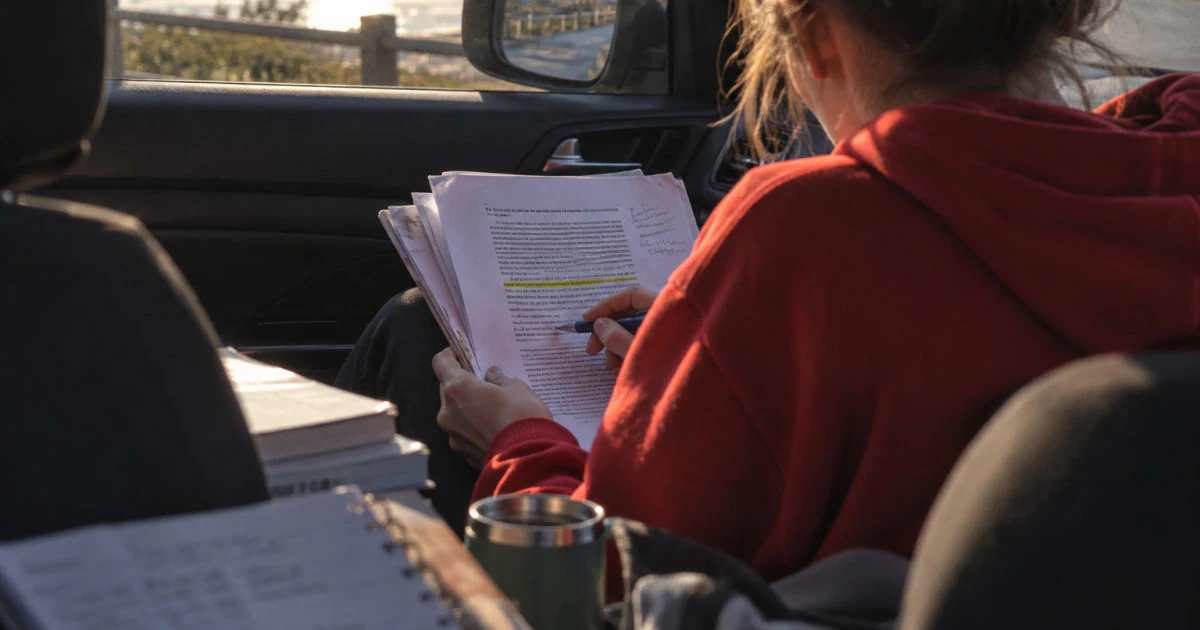
Open the citation closest to the claim. If it leads to another summary, keep going until you find the original study, dataset, policy, or interview. For a study, read beyond the abstract. Look at who or what the researchers studied, what they measured, and what the results actually showed. On a printed copy, highlight the line that defines the outcome and mark any limitation that would change how you describe the result.
In the library example, a report might show that more people entered the building after closing time was extended. That supports a claim about visits, not grades. Even if a study reports that students who used the library more often earned higher grades, that alone does not show that library use caused the difference. Those students might also have had different schedules or study habits.
Then look for an independent check. Two articles repeating the same press release give you one source of evidence, not two. If two sources disagree, check whether they studied different groups, covered different time periods, or used different definitions before you decide which one fits your question.
Decide whether the date matters
Check when the source was published and when its evidence was collected. A recently updated article can still rely on an old survey. For a claim about current library hours, check the current schedule and look for exceptions such as holidays. For a claim about what the college promised when it extended those hours, the original announcement may be exactly what you need.
If you are citing research, look at the publisher’s page for corrections or a retraction notice. A correction might fix a detail that does not affect your argument, or it might change the result you were about to cite. Read what changed instead of assuming the version you downloaded is the latest one.
Choose what to do with the source
- Cite it as evidence. Use it when you can point to a passage or result that supports your exact claim and meets the assignment requirements. Record the page, section, or table now so you can find it again.
- Narrow your claim. If the source supports a smaller point than the one you drafted, revise the sentence. “The library recorded more evening visits after it extended its hours” does not promise an improvement in grades.
- Keep it as a lead. A broad overview can give you search terms, researchers’ names, or useful references. Follow those leads and cite the source you actually read and relied on.
- Leave it out. If you cannot trace a key claim, or if the evidence does not match it, find another source. If the claim is central to your essay and you still cannot support it, reconsider the argument.
Keep reading
- Once you have sources you trust, learn how to compare them in a literature review.
- When you use a finding in your own draft, check how to paraphrase it without losing the meaning.
If you have the original paper as a PDF, upload it to AtomAI’s Read mode and ask what the researchers measured. Then check the answer against the methods and results before you cite it. Try AtomAI free
If you are unsure how to tell if a source is credible, try explaining your choice in one sentence: “I’m citing this source for this claim because it shows this evidence.” If you can fill in those details without stretching what the source says, you have a clear reason to use it. If you cannot, trace the evidence further, narrow the claim, or pick a better source.